Mobile Apps
A suite of field applications designed to capture authentic farmer and farm data for carbon projects.
Role:
Founding UXUI Designer
User Base:
Field Surveyors (Paid-per-acre incentive model)
Project Suite:
Regen Ag, Agroforestry (ARR), Biochar Monitoring
Key constraints:
Low connectivity, low literacy, strict verification

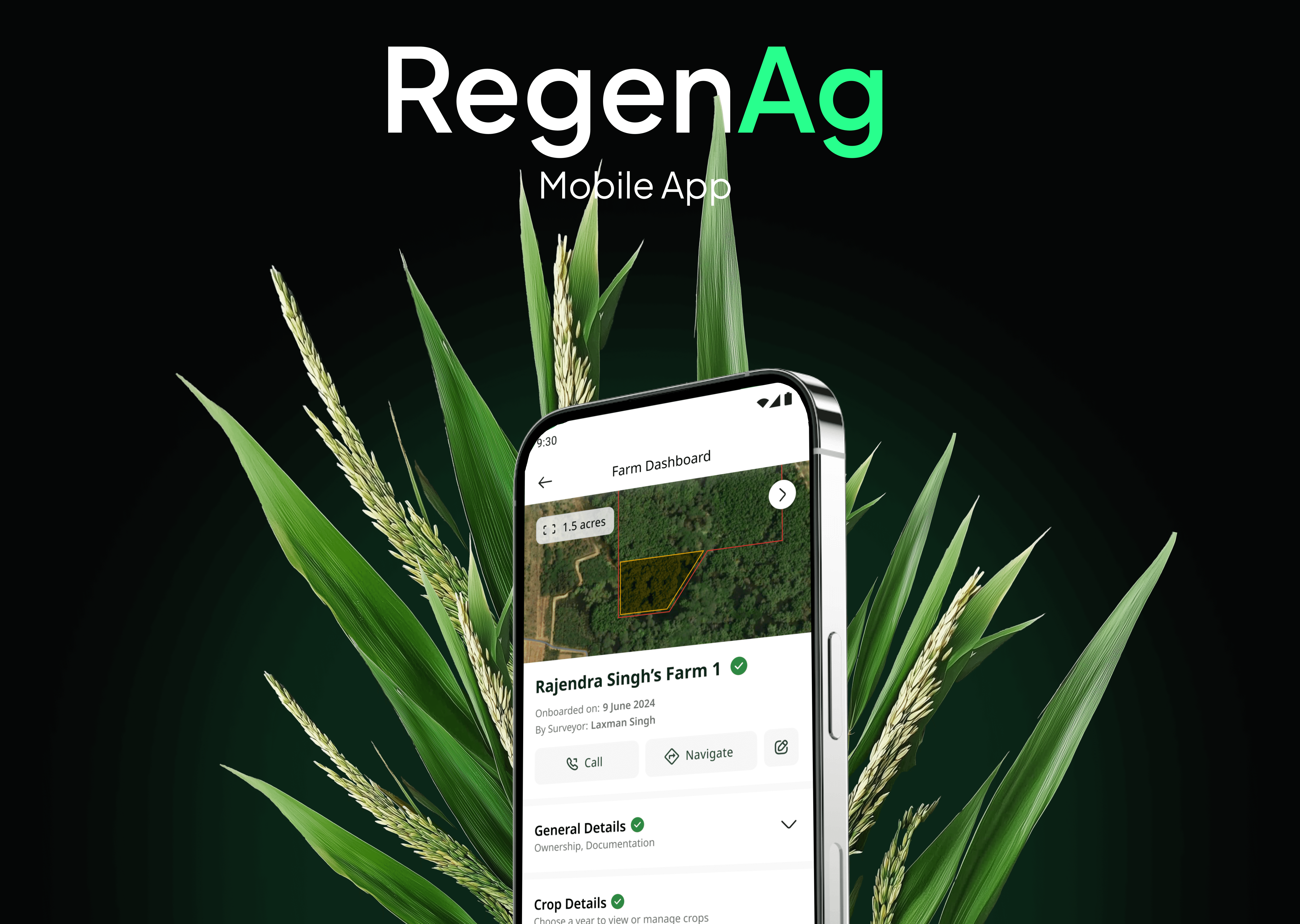
Regenerative Agriculture App
Collecting trustworthy farmer & farm data for carbon projects in low-literacy regions.
Designed the core data-collection flows so field agents could reliably capture authentic farmer & farm data, then worked with an design agency to scale v2+ while keeping UX aligned with on-ground reality and carbon project needs.
Role:
Founding UXUI Designer → Strategic Design Partner
Team:
PM, Engineering Lead, Mobile/Backend Devs, Design Agency
Timeline:
3 Months (MVP Sprint) → Ongoing Scale
The Collaborative Sprint (V1)
The Challenge: We started with zero requirements (No PRD). The data model for verifying carbon credits was complex and lived entirely in the heads of the project team and scientists. The Process: I partnered with the PM and Engineering Lead to decode the science. We mapped out a deep hierarchy (Farmer → Multiple Farms → Crops → Practices) The Execution: Working closely with mobile devs, we built a V1 focused on "Guarded Entry", ensuring agents (paid per verified acre) could only submit data that met strict validation rules.
Scaling with Partners (V2)
The Feedback: Ground usage revealed that collecting Land Documents in one visit was a major friction point for agents. Simultaneously, the scope for carbon verification doubled. The Partnership: To handle the expanded scope, we brought in a design agency The New Dynamic: We moved away from a solo-designer model. I focused on high-level product strategy and solving the some flows, while the other design team worked alongside us to handle the high-fidelity UI production and the later main flows.


Agroforestry App
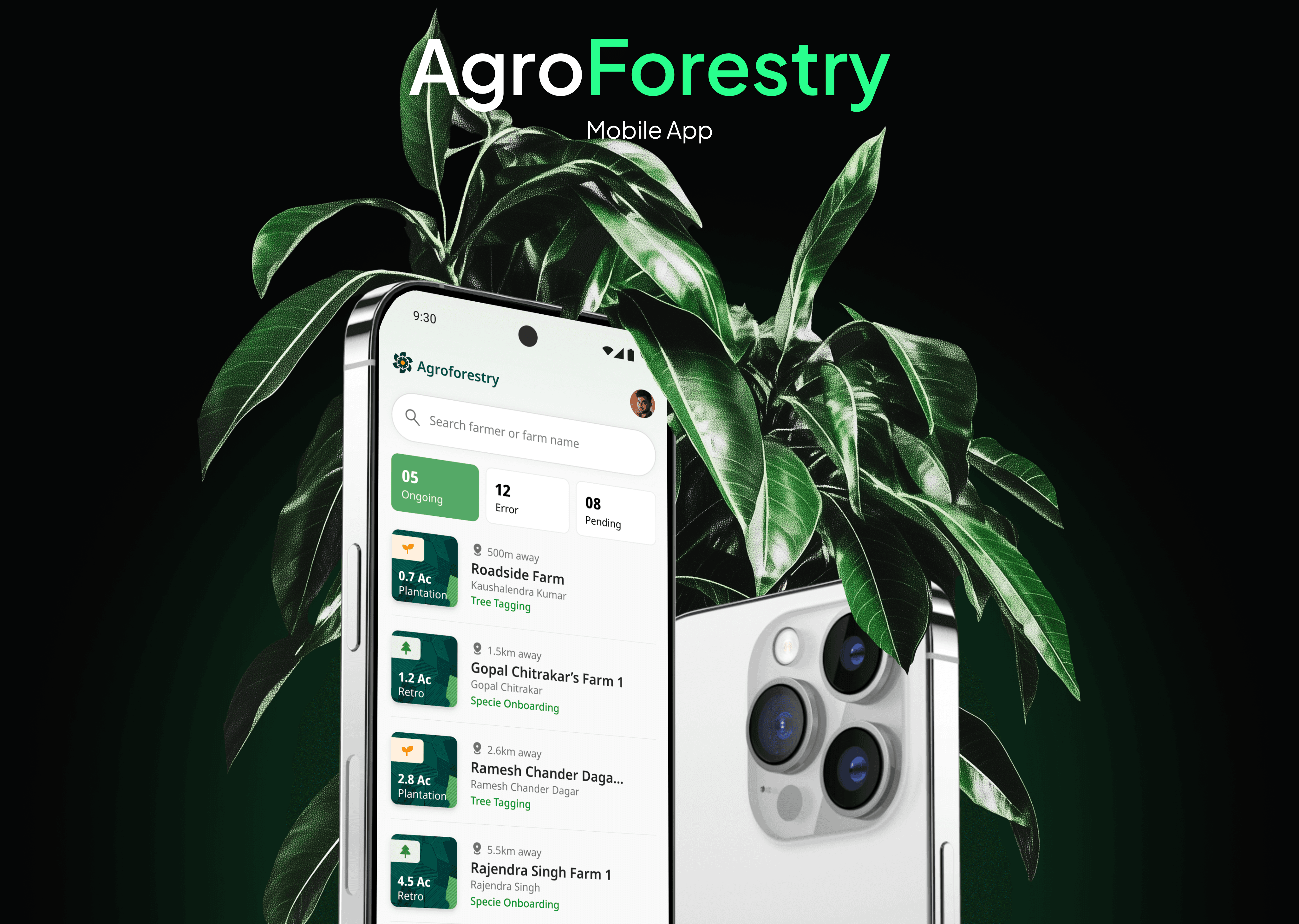
Verifying sapling growth and plantation boundaries to generate carbon credits.
Collaborated with the PM to design the "New Plantation" verification flow in a rapid 9-day sprint—then partnered with the Wolfkraft agency to scale the system for complex "Existing Plantation" mapping while aligning with remote sensing constraints.
Role:
Product Designer
Team:
PM, Project Team, Design Agency
Timeline:
9-Day Sprint (V1) → Scaled Architecture (V2)
The 9-Day Sprint (New Plantations)
The Constraint: We faced a strict deadline to demo a tool that could verify where new saplings were being planted. There was no PRD, just a discussion with the PM and a hard 9-day window to deliver. The Execution: Collaborating closely with the PM to define the absolute essentials, I designed the "New Plantation" verification flow. The resulting UI was intuitive that surveyors were able to use it immediately in the field without formal training.
The Scale (Existing Plantations)
The Complexity: Business needs shifted to verify Existing Plantations. This was a much harder data set involving older trees, complex land boundaries, and strict remote sensing requirements. The Partnership: To handle this complexity and volume, we again partnered with a design agency. The Workflow: We worked as a cohesive unit. I collaborated with Remote Sensing & Ops leads to define the data verification problems, while the agency deisgn team worked alongside us to produce more flows and high-fidelity UI. This allowed us to build a scalable architecture where new data requirements could be injected without breaking the user's mental model.


Biochar App
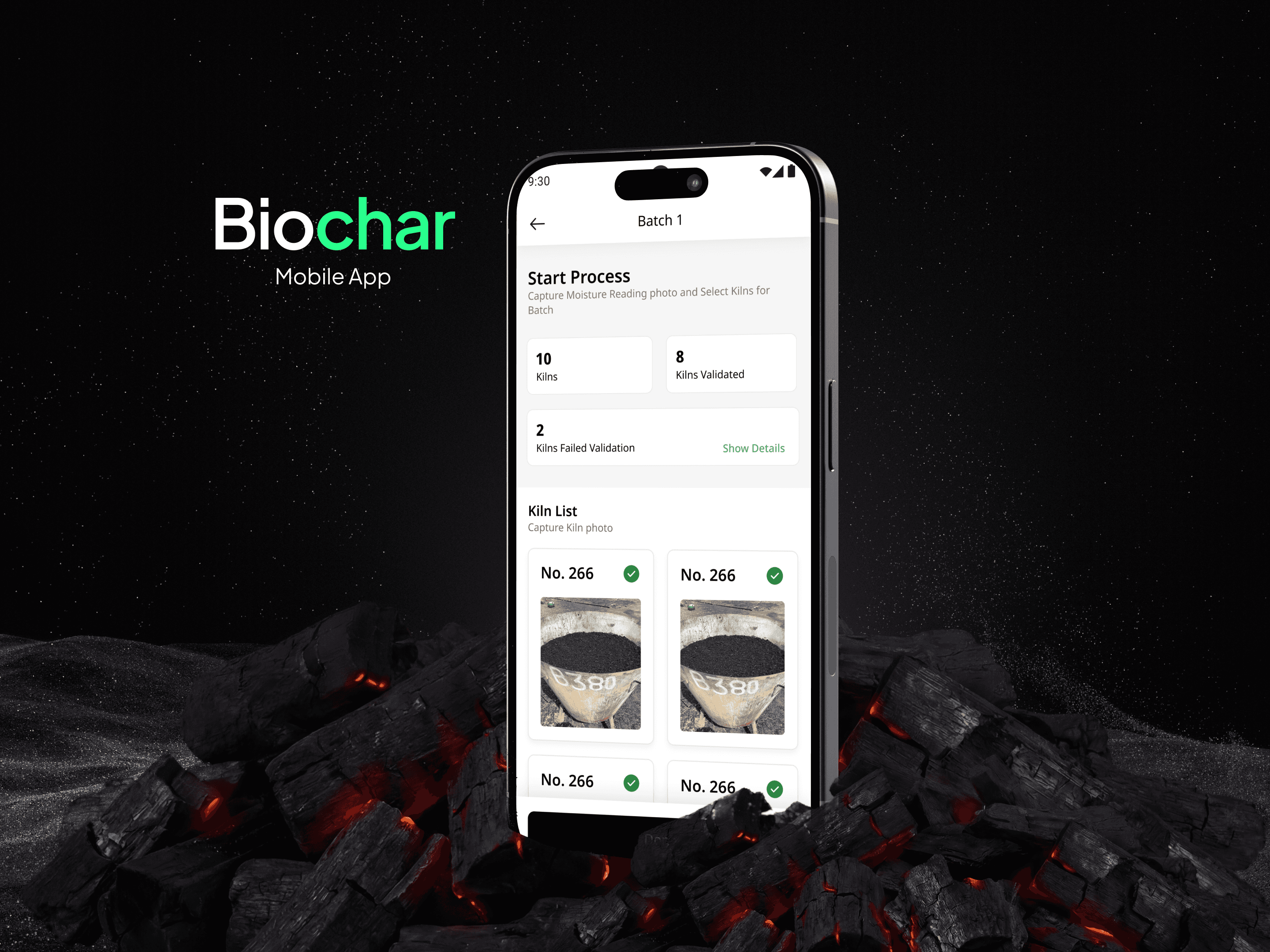
Verifying the production and soil application of biochar to generate carbon removal credits.
Collaborated with the Engineering Lead to replace a broken ODK system where surveyors were faking data—then navigated extreme ambiguity to design the future "Industrial" workflows using AI prototyping to visualize plants that didn't yet exist.
Role:
End-to-End Product Designer
Team:
Engineering Lead (No PM initially)
Timeline:
3 months for v1, ongoing iterations
The Dual Problem Space (Artisanal & Industrial Biochar Production)
The Problem: The Biochar project faced two opposing problems. On the Artisanal side, surveyors using ODK were faking data—reusing photos and logging ghost sites. On the Industrial side, we needed a parallel app for future plants, but those factories were still just concepts with no machines or physical workflows to observe. The Fix: With no PM on board, I worked directly with the Engineering Lead to extract requirements and structure the ecosystem into three clear phases: Biomass Procurement, Production, and End-Use Application. For the Artisanal flow, I designed anti-fraud UX that blocked photo-reuse and location spoofing so every bag of biochar was backed by real, verifiable proof. To unlock the Industrial side, I used GenAI tools to rapidly prototype hypothetical machine workflows, letting us visualize the “Production” phase long before the physical plants existed.
Impact
Eliminated Data Fraud: The new system closed the loopholes in ODK by enforcing strict evidence capture, securing the integrity of the carbon credits. Future-Proofed Architecture: I delivered a unified system where Procurement and End-Use remain consistent across both models, while the Production module flexes between manual (Artisanal) and machine-driven (Industrial) inputs—making the product ready for today’s field realities and tomorrow’s industrial plants.


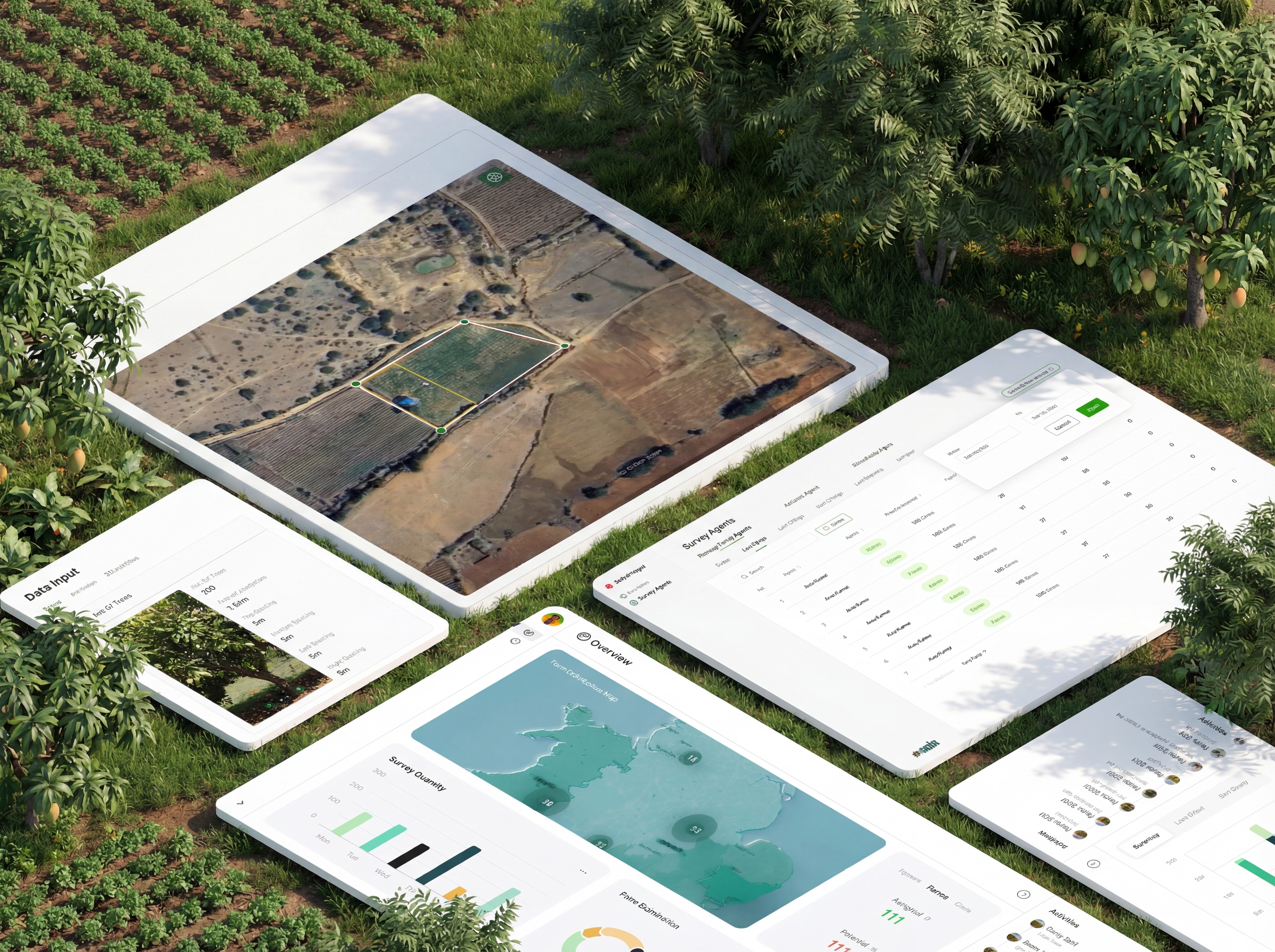
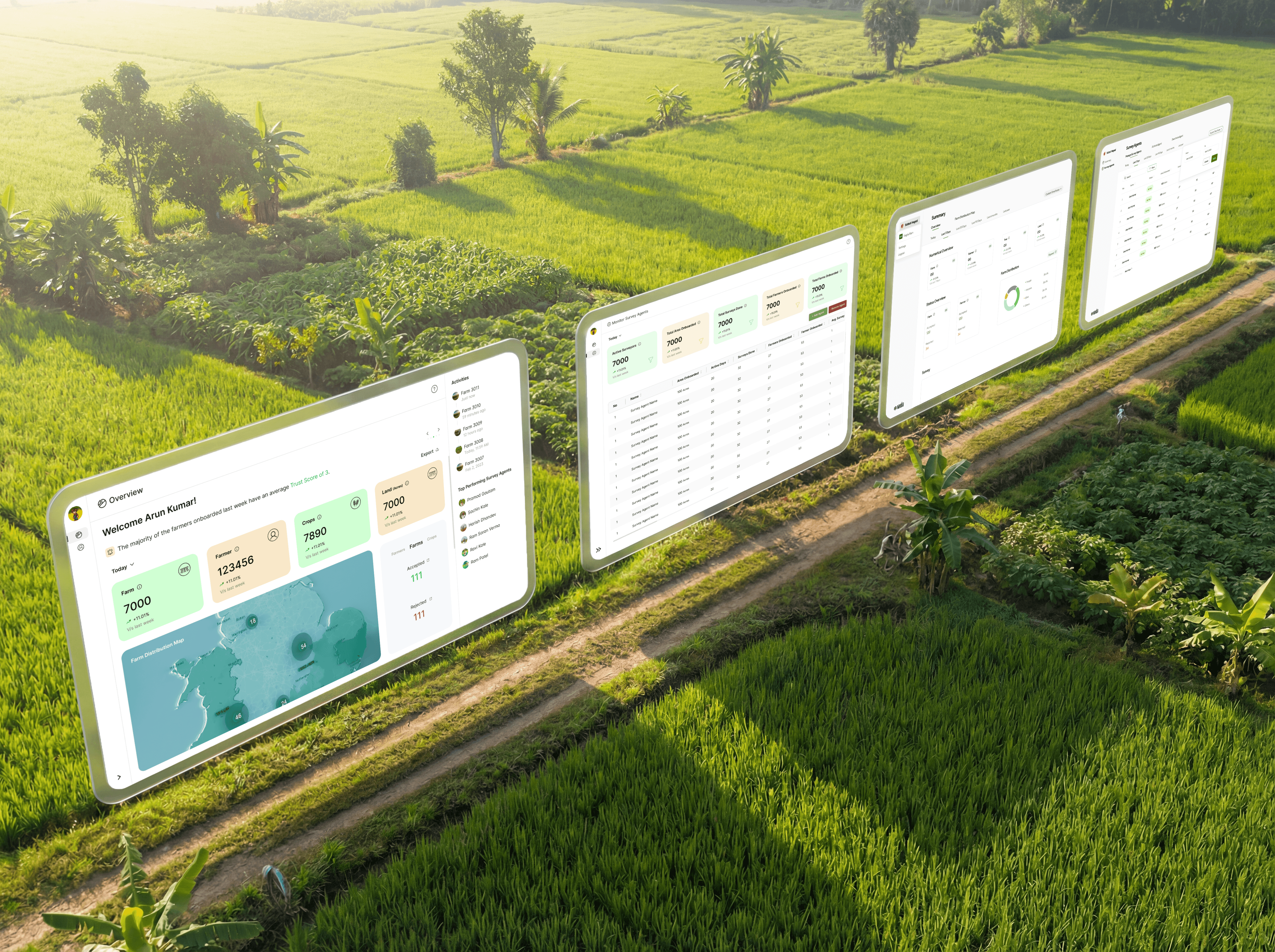
Dashboards
2 Dashboard Apps
Designing the central nervous system for internal operations